

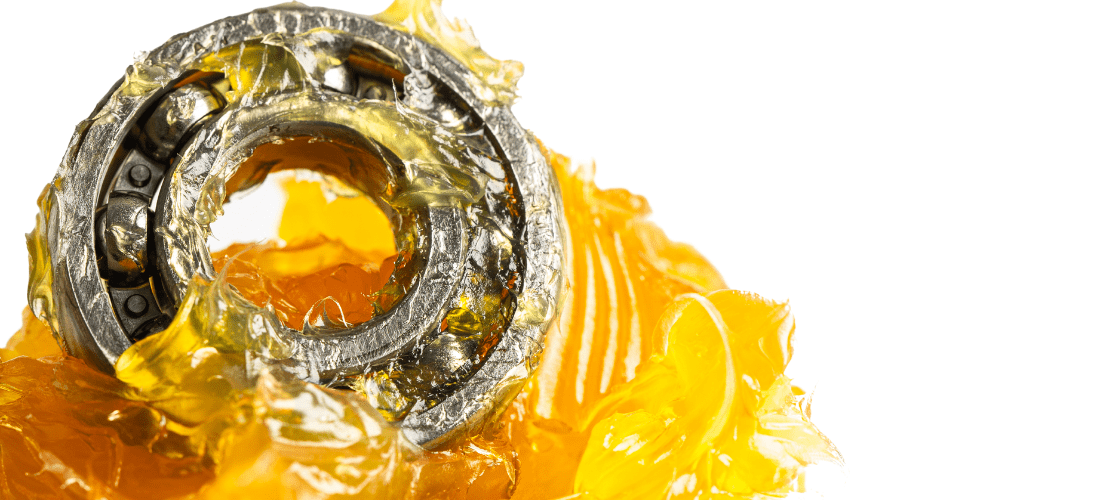
Bearings rely on effective lubrication to operate reliably under load. Without proper lubrication, friction between rolling elements and raceways increases rapidly, leading to heat generation, accelerated wear and ultimately premature bearing failure.
In this article, we will consider why lubrication is important in machinery.

Reducing Friction And Heat
The primary role of lubrication for bearings is to reduce friction. As surfaces rub against each other, they create heat and wear, which can lead to bearings failing prematurely. Lubrication acts as a protective barrier between the surfaces of moving parts, reducing friction and minimising abrasion. Bearings that have been correctly lubricated generate less heat and are more likely to provide long-term high performance, resulting in fewer periods of disruptive downtime and lower maintenance and repair costs.
Ensuring Proper Operation
Inside a bearing, rolling elements move continuously between the inner and outer raceways. Lubrication forms a thin film that separates these surfaces, preventing metal-to-metal contact and ensuring smooth operation. Lubrication ensures that the rolling elements inside the bearing can move smoothly and with minimal resistance. Without adequate lubrication, the bearing would struggle to function, leading to increased wear, heat, and potential failure.
Types of Bearing Lubrication
Bearings are typically lubricated using either grease or oil depending on the operating conditions.
Grease lubrication
- most common in industrial machinery
- provides long service intervals
- helps protect against contamination
Oil lubrication
- used in high-speed or high-temperature applications
- provides better heat dissipation
- often used in gearboxes and circulating systems
Selecting the correct lubrication method depends on factors such as speed, load, temperature and environmental conditions.
Preventing Rust And Corrosion
Bearings are often exposed to harsh environmental conditions, increasingly the risk of rust and corrosion. Moisture and contaminants in the surrounding air can cause corrosion, which can significantly decrease the life of a bearing. Proper lubrication forms a protective barrier, preventing moisture and contaminants from making contact with the bearing's surfaces. As well as reducing maintenance needs, lubrication also prolongs the equipment's lifespan, saving your business money in the long-run.
The Right Lubrication Matters
Not all bearings are created equally, and likewise, not all lubrication is suitable for every type of bearing. The type and viscosity of lubrication matter significantly. Some bearings require greases, while others work best with oils. Choosing the right lubricant ensures optimum performance and longevity. When selecting the appropriate lubrication, it is essential to consider factors such as operating conditions, speed, load, and temperature. A tailored approach ensures that your bearings will receive the care they need to perform at their best.
Choosing the Right Bearing Lubrication
Selecting the correct lubrication method is essential for maximising bearing life and maintaining reliable machinery performance.
At BTL-UK, we supply a wide range of bearings and power transmission components for demanding industrial applications.
If you need assistance selecting the right bearing or lubrication solution, contact our team for expert advice.
Image Source: Canva


